

What the Commandments Are Really For
Part One of Practicing the Kingdom

Hi everybody! Thanks for being here. Practicing the Kingdom is a series that explores how following Jesus reshapes our imagination, our desires, and our way of life.
Part One: What the Commandments Are Really For
Meredith was being a problem. That’s what our daughter’s third grade teacher was telling us.
“What do you mean?” we asked.
The teacher pointed to a large display at the front of the room. Across the top were twelve construction-paper rectangles, each numbered with a different rule beneath it.
“Do you see those? They are the twelve commandments of this classroom. Every time a student disobeys a commandment, I put their name under the tablet for everyone to see. Look how many times I’ve listed Meredith’s name. She talks too much.”
To ease the tension I said, “Well, I mean, even God has only ten commandments.”
Meredith’s teacher didn’t see the humor. Joy stifled a laugh but gave me the side eye. I got the message: “That’s hilarious. You’re not helping.”

Joy’s look stopped me from saying what was going to come next: that’s not how commandments work in the first place. At least not God’s commandments.
The Ten Commandments are not rules to follow in order to stay in God’s favor. They are practices that teach us how to live together as the kind of people God created us to be.
God did not give the commandments as a test to see whether we would obey and deserve punishment when we fail. The commandments are an invitation into a fuller way of living together. After all, to be fully human is to live in relationship: with God, with one another, and even with ourselves.
Jesus had some conflict with religious authorities about the fourth commandment: Remember the Sabbath and keep it holy. So, let’s use this commandment to illustrate the point.
Jesus calls us to another way. A way of mercy, generosity, courage, and love. A way of being human together that reflects the Kingdom of God.
On one Sabbath Jesus and his disciples were passing through a grainfield. The disciples plucked grain and ate as they walked. Some religious authorities criticized them for working on the Sabbath, clearly breaking God’s commandment.
Jesus famously replied that the Sabbath was made for humans. Humans were not made for the Sabbath. In other words, God gives us Sabbath for our flourishing, not as a rule to enforce rigidly. (Mark 2:23–28)
In our day, we often think Sabbath simply means taking a day off. But as John Mark Comer points out, many of us are just as busy on our days off as we are during the workweek. We cram errands, chores, unfinished projects, and even leisure activities into every available moment. We may stop working for a paycheck, but we never really stop.
But you see, that misses the point of Sabbath completely.
Sabbath means stop. Stop hurrying. Stop producing. Stop distracting ourselves with all the urgent but not ultimate things of life. The point is not merely rest. The point is remembering what is most real: our life with God. Set aside one day to practice remembering that. Over time, Sabbath teaches us to carry that attentiveness into the rest of our lives.
That is how human beings flourish. How we begin to feel in our bones that we were made by love and for love.
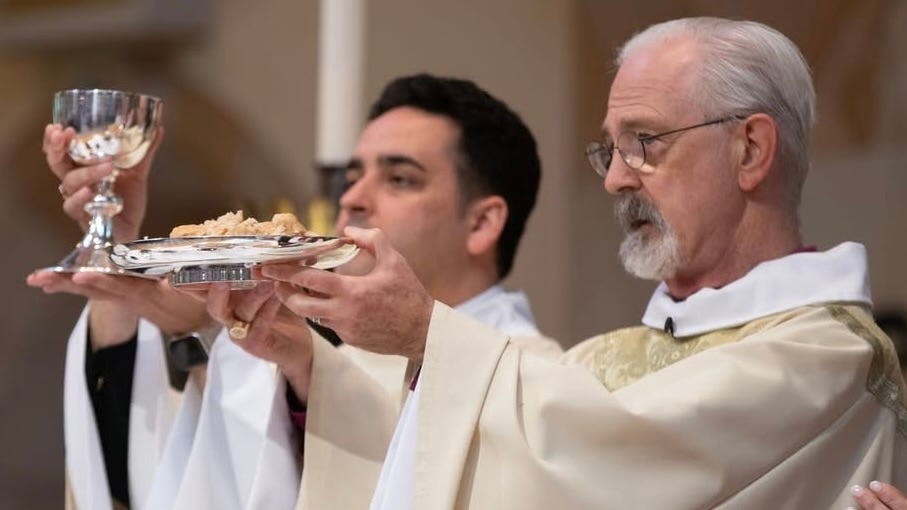
And it is precisely that kind of flourishing Jesus came to share with us. He is God in the flesh showing us what fully human life looks like. Jesus teaches us through his way of living, his healings and table fellowship, his death and resurrection. When he says, “Follow me,” he is inviting us to pattern our lives on his way of love.
As Jesus prepared to ascend, he told his followers to continue this work of formation by embodying it themselves. “[Teach] them to obey everything that I have commanded you.” (Matt. 28:20)
Feed the hungry, shelter the homeless, clothe the naked. Not to prove our worthiness, but because this is what love does.
Resist evil with good. Be merciful even to the wicked. Remember that every person is more than the worst thing they have ever done.
Keep the main thing the main thing.
Jesus was not naïve. He knew this is not the way the world usually works. Ours is a world shaped by competition, distraction, fear, and the pursuit of more.
And yet Jesus calls us to another way. A way of mercy, generosity, courage, and love. A way of being human together that reflects the Kingdom of God.
To practice the life of heaven here on earth.
Next week’s post is called What’s the Hurry? We’ll be looking at the spiritual cost of busy-ness and how practicing the Kingdom restores our peace.
A Spiritual Practice
Set aside ten quiet minutes at the end of one day this week. No phone. No television. No music. Just silence.
Then ask yourself:
What shaped my heart today?
What most captured my attention?
What hurried me?
What gave me peace?
What helped me love God and other people more deeply?
What pulled me away from the main thing?
Do not judge yourself harshly. Simply notice.
Then end with this prayer:
Lord Jesus, teach me the way of your Kingdom. Reorder my desires. Quiet what distracts me from you. Shape my life by your love so that I may become more fully human in you. Amen.
That’s it for now, friends. Until next week, be well and God bless.
Jake
P.S. Thanks to all my wonderful subscribers! I’m so glad you’re here. A special shoutout to those who are supporting ministry in under-resourced contexts with paid subscriptions. You’re generosity is making an impact. More than twenty children and youth will be attending Summer Camp thanks to you.
P.P.S. If you would like to schedule me for your event (in-person or virtually), my colleague Holly will be glad to help.
“Resist evil with good. Be merciful even to the wicked. Remember that every person is more than the worst thing they have ever done.”
Amen
One of the 10 Rules Maria Montessori advocated FOR TEACHERS: Never speak ill of the child whether in the child’s presence or absence.